
Professional Padel Court Fencing & Enclosure Installation in Houston
Premium glass walls, steel mesh, and structural frameworks built to last
The enclosure system defines padel courts and fundamentally shapes the playing experience. Unlike traditional racket sports played on open courts, padel's enclosed design—combining glass back walls with metal mesh sides—creates the unique dynamics that distinguish the sport. Professional fencing installation requires precision engineering, quality materials, and expert craftsmanship to create safe, durable, and regulation-compliant enclosures.
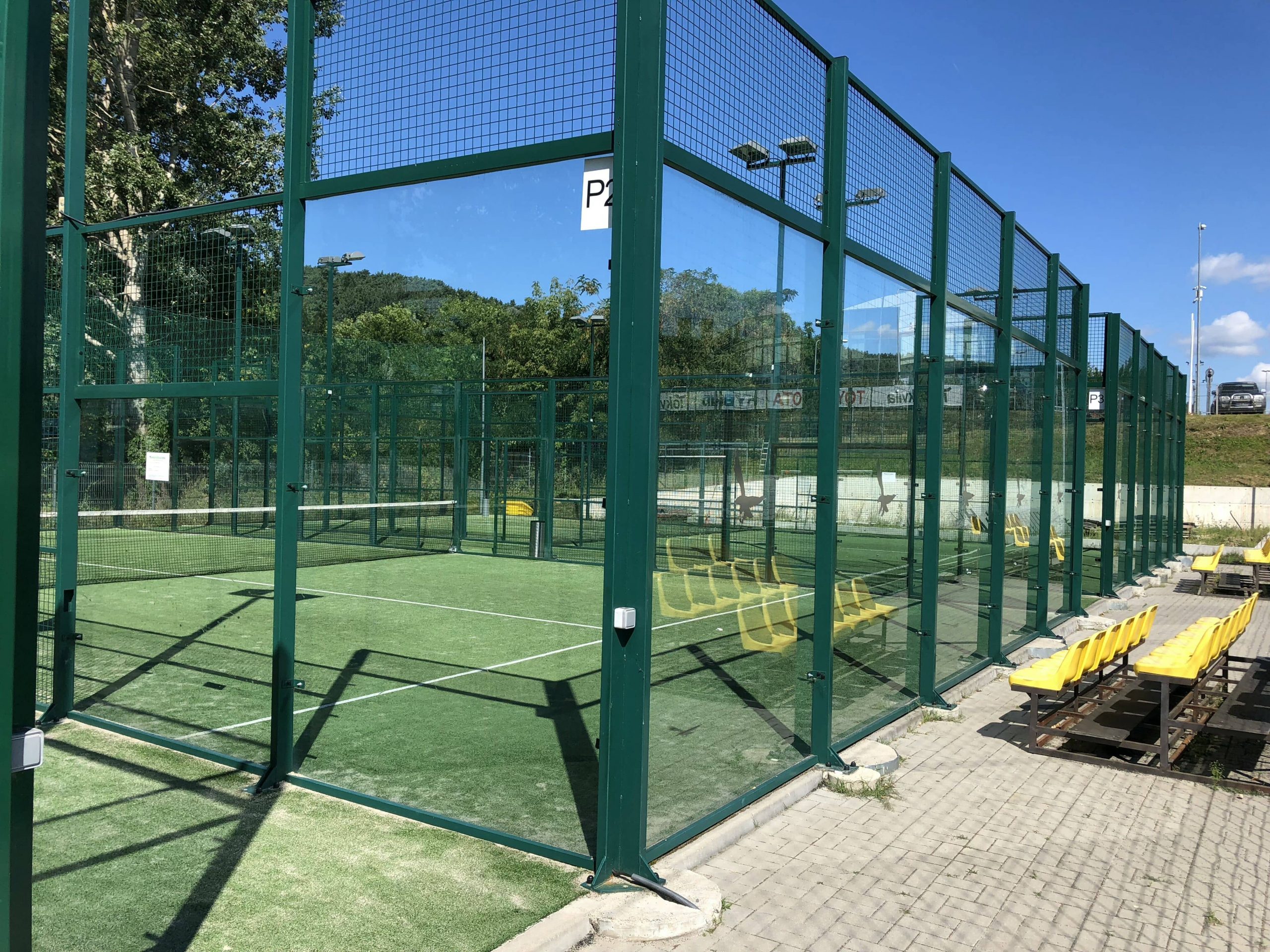
Glass walls serve as both playing surfaces and visual elements, requiring specialized tempered safety glass capable of withstanding intense ball impacts and player contact. These transparent panels create the spectacle that makes padel engaging for spectators while providing the rebound characteristics essential to gameplay. Metal mesh fencing completes the enclosure, containing play while allowing visibility and airflow.
In Houston's challenging Gulf Coast environment, enclosure materials must withstand intense UV exposure, high humidity, heavy rainfall, and occasional severe weather. Professional installation using materials specifically rated for these conditions ensures enclosures remain safe and attractive throughout their service life. Our comprehensive fencing services encompass design, material specification, structural engineering, and expert installation tailored to Houston's unique climate demands.
Service Details
GLASS WALL SYSTEMS FOR PADEL COURTS
Glass walls represent the most visually distinctive and technically demanding component of padel court enclosures. These transparent panels must satisfy multiple requirements: structural integrity under impact, optical clarity for visibility, safety in breakage scenarios, and consistent rebound characteristics for gameplay.
Tempered safety glass is the industry standard, typically 10-12mm thick for standard installations. Tempering creates internal stress patterns that cause glass to shatter into small, relatively harmless granules rather than dangerous shards if broken. This safety characteristic is essential given the potential for player contact and ball impacts during intense play.
Optical quality affects both player experience and spectator enjoyment. High-quality glass maintains clarity without distortions that could affect depth perception or create visual fatigue. Low-iron glass options reduce the green tint common in standard tempered glass, providing clearer views and better color accuracy. Anti-glare treatments help manage Houston's intense sunlight, reducing reflections that could blind players or spectators.
Glass installation requires precise alignment within steel frameworks. Panels must be level, plumb, and properly cushioned to prevent stress concentrations that could lead to spontaneous breakage. Specialized gaskets and mounting hardware accommodate thermal expansion while maintaining secure positioning. Professional installation teams use precision tools and techniques to achieve the exacting tolerances required for quality results.
METAL MESH FENCING COMPONENTS
Metal mesh fencing completes the padel court enclosure, containing play while providing visibility and ventilation. These mesh panels fill the spaces between glass walls and above the playing surface, creating the cage-like environment characteristic of padel courts.
Steel mesh typically uses galvanized wire with vinyl or powder-coat finishes for corrosion resistance. Mesh patterns balance visibility requirements with structural strength, commonly using 50mm x 50mm or 50mm x 100mm openings. Wire gauge affects both strength and appearance, with heavier gauges providing durability at the cost of reduced visibility.
Mesh panel fabrication occurs in controlled factory environments to ensure consistent quality. Panels are cut to precise dimensions with properly finished edges that won't snag clothing or cause injury. Factory-applied coatings provide uniform protection against corrosion—a significant consideration in Houston's humid climate.
Installation requires tensioning systems that keep mesh taut and prevent sagging over time. Proper tension maintains appearance and prevents ball entrapment in loose sections. Connection hardware must resist corrosion while allowing some movement to accommodate wind loads and thermal expansion without creating stress points.
STRUCTURAL FRAMEWORK AND SUPPORT SYSTEMS
The structural framework supporting glass and mesh panels must withstand significant loads while maintaining precise alignment. Steel posts, beams, and connection hardware form the skeleton that defines court dimensions and ensures long-term stability.
Steel posts serve as primary vertical supports, typically using square or rectangular structural tubing in heavy gauges. Post dimensions depend on court height and wind load requirements, with Houston installations requiring ratings appropriate for Gulf Coast wind exposure. Posts anchor to concrete foundations extending below grade to resist overturning forces.
Connection systems join framework components while allowing some adjustment during installation. Precision-manufactured brackets, clamps, and fasteners maintain alignment while accommodating thermal expansion. All connection hardware receives protective coatings to prevent corrosion in Houston's humid environment.
Foundation design considers soil conditions, wind loads, and structural requirements specific to each installation. Houston's clay soils may require special foundation designs with enhanced drainage to prevent moisture accumulation. Professional engineers calculate foundation specifications to ensure adequate support under all loading conditions.
THE PROFESSIONAL INSTALLATION PROCESS
Quality enclosure installation follows systematic procedures ensuring structural integrity, safety compliance, and optimal appearance. The process begins only after court foundations and surfaces are complete and properly cured.
Layout and marking establish precise court dimensions and post locations. Laser levels and surveying equipment ensure accurate positioning that will result in square, level courts. Marking must account for foundation dimensions and required clearances around court perimeters.
Foundation work for posts requires excavation, forming, and concrete placement to engineering specifications. Post bases may include anchor bolt patterns or embedded plates depending on connection designs. Proper curing time ensures concrete achieves design strength before post installation.
Post installation sets the framework for all subsequent work. Posts must be plumb and properly aligned before final anchoring. Temporary bracing maintains position during framework assembly. Connection hardware installation follows, creating the structural grid that supports glass and mesh panels.
Glass panel installation requires specialized equipment and techniques. Panels are carefully positioned within frames, cushioned with appropriate gaskets, and secured with designed hardware. Teams work systematically around the court, verifying alignment and security at each step.
Mesh installation completes the enclosure, with panels tensioned and secured to framework members. Final adjustments ensure consistent appearance and proper function. Comprehensive inspection verifies structural integrity, safety features, and compliance with design specifications.
CLIMATE ADAPTATIONS FOR HOUSTON INSTALLATIONS
Houston's subtropical climate presents specific challenges for enclosure longevity and performance. Professional installation incorporates material selections and design features addressing these environmental factors.
Corrosion protection is paramount given Houston's high humidity and coastal influence. Hot-dip galvanized steel provides superior protection compared to electro-galvanized or painted finishes. Additional powder coating adds aesthetic options while enhancing corrosion resistance. All hardware receives appropriate protection, with stainless steel used for critical connections.
UV resistance prevents degradation of coatings and gasket materials. Houston's intense sun exposure accelerates fading and embrittlement of inadequate materials. Premium systems use UV-stabilized coatings and synthetic components rated for high-sun environments. Color selection also considers heat absorption, with lighter colors reducing thermal stress on components.
Wind load design accounts for Gulf Coast exposure. Enclosure systems must withstand design wind speeds specified in local building codes, which may exceed 120 mph in Houston area. Post foundations, connection strength, and mesh tensioning all contribute to wind resistance. Removable mesh panels or other storm preparation features may be incorporated in hurricane-prone areas.
Thermal expansion management prevents stress buildup as components heat and cool. Houston's temperature variations, while moderate compared to northern climates, still create significant expansion in large metal structures. Expansion joints, flexible connections, and proper installation clearances accommodate movement without compromising structural integrity.
FREQUENTLY ASKED QUESTIONS
Do you offer free consultations?
Yes, we provide free consultations and quotes for all padel court projects in Houston and surrounding areas. Contact us to schedule your consultation.
What areas do you serve?
We serve Houston and all surrounding areas including Pasadena, Pearland, League City, Baytown, Sugar Land, Missouri City, Katy, Stafford, and more.
GET YOUR FREE QUOTE TODAY
Serving Houston and surrounding areas with professional Padel Court Fencing services. Contact us now for a free consultation.