
Professional Padel Court Maintenance Services in Houston
Protect your investment and maximize court longevity with expert care
Regular maintenance is essential for protecting padel court investments and ensuring consistent, safe play conditions. Unlike facilities that receive attention only when problems become obvious, well-maintained courts deliver decades of reliable service while minimizing long-term costs. In Houston's challenging climate—where intense UV, high humidity, heavy rainfall, and temperature extremes constantly stress court materials—systematic maintenance programs are not optional luxuries but practical necessities.
Maintenance encompasses daily, weekly, monthly, and seasonal tasks addressing different aspects of court care. Surface cleaning preserves appearance and playability, drainage maintenance prevents water damage, structural inspections catch issues before they escalate, and preventive treatments extend material lifespans. Professional maintenance services provide expertise, specialized equipment, and consistent attention that busy facility owners may struggle to deliver.
The economics of maintenance strongly favor proactive care. Preventing damage through routine maintenance costs a fraction of repairing or replacing neglected components. A well-maintained court may deliver 15-20 years of service, while poorly maintained courts often require major investments within 8-10 years. For Houston facilities facing accelerated degradation from harsh climate conditions, professional maintenance programs provide essential protection for substantial investments.
Service Details
DAILY AND WEEKLY MAINTENANCE TASKS
Routine maintenance tasks form the foundation of effective court care. These frequent, relatively simple procedures prevent accumulation of problems and maintain day-to-day playability.
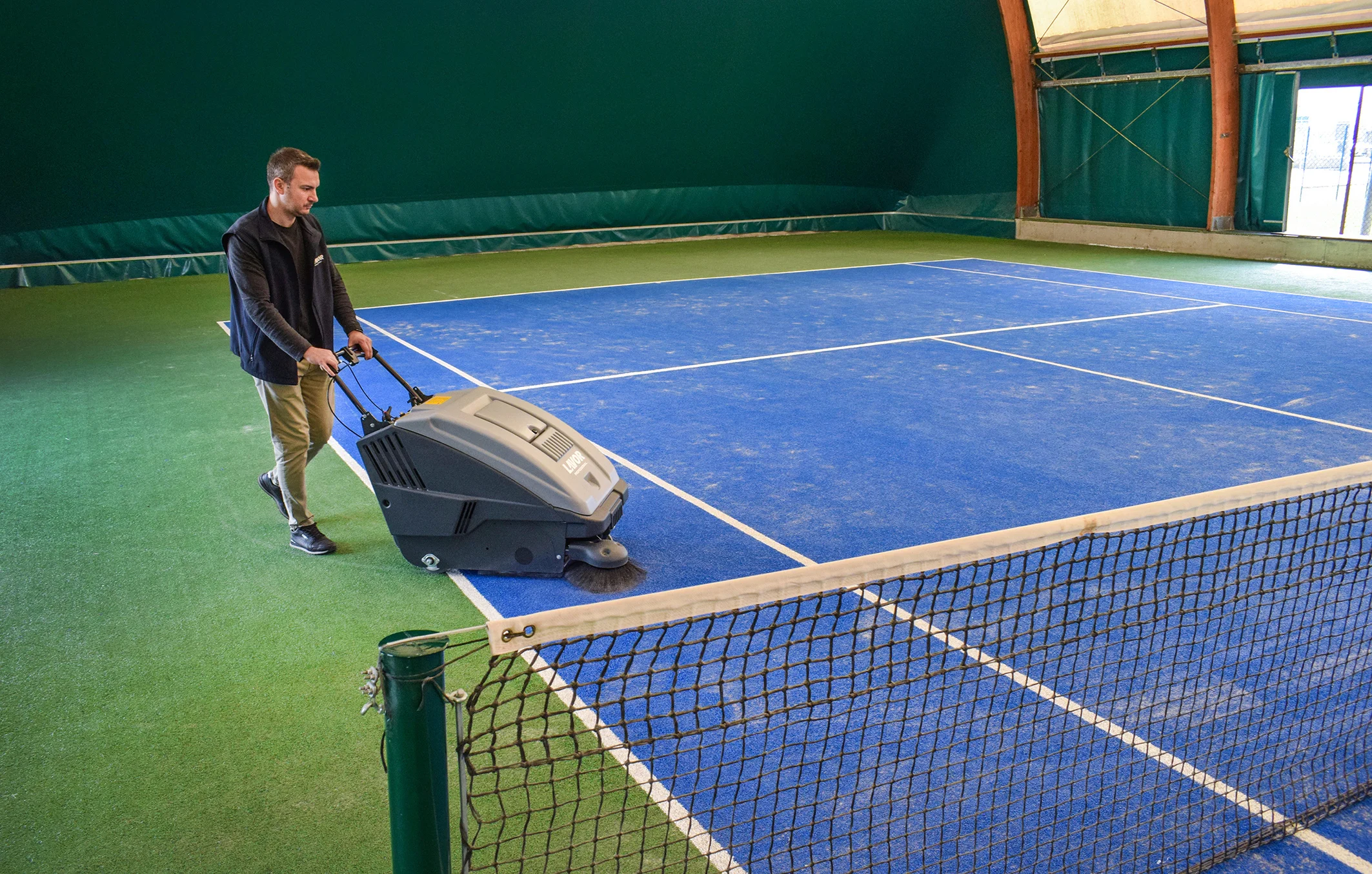
Debris removal should occur before each day's play or after storm events. Leaves, twigs, trash, and organic matter accumulate on court surfaces, affecting play and potentially staining or damaging materials. Soft brooms, leaf blowers, or specialized court sweepers remove debris without damaging surfaces. Particular attention to court corners and edges where debris concentrates prevents drainage blockage.
Surface inspection during routine cleaning identifies developing issues. Look for tears in turf, cracks in hard surfaces, standing water indicating drainage problems, or loose hardware on enclosure systems. Early identification allows prompt attention before minor issues become major repairs. Documentation of findings tracks patterns and informs maintenance planning.
Equipment checks verify net tension, post stability, and gate function. Nets should maintain proper height and tension for regulation play. Net posts and anchor systems should show no looseness or damage. Gates should operate smoothly with latches functioning properly. These checks prevent gameplay interruptions and safety hazards.
Cleaning of high-touch areas maintains hygiene and appearance. Gate handles, bench surfaces, and drinking fountain controls harbor germs and show dirt quickly. Regular cleaning with appropriate disinfectants protects player health and projects facility quality. In Houston's humid climate, this cleaning also prevents mold or mildew development.
MONTHLY AND QUARTERLY DEEP MAINTENANCE
Periodic deep maintenance addresses needs that develop over weeks or months rather than days. These procedures require more time and specialized attention than daily routines.
Turf grooming restores fiber position and redistributes infill on artificial surface courts. Brushing against the grain lifts matted fibers, improving appearance and play characteristics. Infill leveling addresses displacement from player traffic and wind, maintaining consistent surface cushioning and ball bounce. Professional grooming equipment achieves results difficult to match with manual tools.
Drainage system inspection and cleaning ensures water management function. Catch basin traps require emptying of accumulated debris. Trench drain grates need cleaning to maintain flow capacity. French drain outfalls should show evidence of water flow during and after rain events. Any drainage slowdowns indicate need for professional attention before complete blockage occurs.
Glass cleaning maintains visibility and appearance. Interior and exterior glass surfaces accumulate fingerprints, dust, pollen, and water spots that affect clarity. Professional cleaning with appropriate solutions and squeegees achieves streak-free results. In Houston's pollen-heavy spring, more frequent cleaning may be needed during peak seasons.
Metal framework inspection identifies corrosion, loose connections, or damage requiring attention. Galvanized coatings should remain intact; any rust spots need prompt treatment to prevent spreading. Connection hardware should be tight and secure. Mesh tension should remain uniform without sagging. Addressing these issues promptly prevents escalation and safety hazards.
SEASONAL MAINTENANCE CONSIDERATIONS
Houston's seasons, while moderate compared to northern climates, create varying maintenance demands throughout the year. Seasonal maintenance programs address these cyclical needs.
Spring maintenance focuses on recovery from winter and preparation for heavy summer use. Deep cleaning removes accumulated winter debris. Drainage systems receive thorough inspection before spring rainy season. UV protectant applications on surfaces and framework prepare for intense summer sun. Any winter damage receives repair before peak season demand.
Summer maintenance addresses heat and storm impacts. Increased cleaning frequency manages dust and debris. Storm preparedness includes securing loose items and verifying drainage capacity. Post-storm inspections identify any wind or water damage requiring prompt attention. Surface temperature monitoring helps manage player safety during extreme heat events.
Fall maintenance prepares facilities for increased usage as temperatures moderate. Deep grooming of turf surfaces addresses summer wear accumulation. Drainage cleaning removes leaf debris before winter. Structural inspections identify any issues needing attention before winter weather. Planning for any winter renovation work begins during this season.
Winter maintenance, while reduced in Houston's mild climate, still requires attention. Occasional cold fronts may bring freezing conditions requiring drainage protection. Reduced usage periods provide opportunity for deferred maintenance and minor repairs. Planning for spring maintenance programs occurs during this relatively quiet period.
PROFESSIONAL MAINTENANCE SERVICES
While some maintenance tasks can be handled in-house, professional services provide expertise, equipment, and consistency that enhance court care. Understanding when and how to engage professional maintenance optimizes facility management.
Specialized equipment achieves results impossible with standard tools. Professional groomers for turf surfaces, pressure washers calibrated for court materials, and high-reach equipment for glass and fence cleaning provide thorough care without damage risk. Equipment investment often makes professional service more economical than in-house capability development.
Technical expertise identifies issues untrained observers miss. Professional maintenance technicians recognize early signs of developing problems—inadequate drainage, foundation settlement, coating deterioration—that allow preventive intervention. This expertise develops through experience with multiple facilities and ongoing training on materials and techniques.
Consistent execution ensures maintenance occurs as scheduled despite competing priorities. In-house maintenance often suffers from staff availability issues, weather delays, or higher-priority demands. Professional service contracts guarantee regular attention according to planned schedules, providing reliability that protects facility investments.
Documentation and reporting track facility condition over time. Professional services provide maintenance logs, condition reports, and recommendations that inform long-term planning. This documentation supports warranty claims, insurance needs, and capital planning for future improvements or resurfacing.
ADDRESSING HOUSTON'S CLIMATE CHALLENGES
Houston's specific environmental conditions create maintenance priorities that might be less critical elsewhere. Understanding and addressing these factors protects facilities effectively.
UV exposure management is paramount given Houston's intense sun. Surface coatings, sealants, and synthetic materials all degrade faster under Texas UV levels. Maintenance programs should include UV protectant applications on appropriate surfaces and early identification of UV-related degradation. Color changes, material brittleness, or surface chalking indicate UV damage requiring attention.
Moisture management addresses humidity and rainfall impacts. High humidity promotes mold, mildew, and algae growth on surfaces and structures. Regular cleaning with appropriate treatments prevents these issues. Heavy rainfall tests drainage systems and may reveal developing problems. Post-storm inspections should be standard practice during Houston's rainy seasons.
Heat management affects both materials and users. Surface temperatures during Houston summers can reach damaging levels for some materials and dangerous levels for player contact. Shade structures, surface color selection, and usage scheduling help manage heat impacts. Maintenance should monitor for heat-related material degradation.
Storm preparedness and response protects facilities from weather damage. Hurricane season requires securing loose items, verifying drainage capacity, and having response plans for post-storm damage assessment. Even routine thunderstorms can damage facilities through wind or fallen limbs. Maintenance programs should include storm preparation protocols and rapid response capabilities.
FREQUENTLY ASKED QUESTIONS
How often should padel courts be maintained?
We recommend regular maintenance every 3-6 months depending on usage. This includes debris removal, infill redistribution, line marking touch-ups, and drainage system cleaning.
What does padel court maintenance include?
Our maintenance services include debris removal, infill redistribution and topping, line marking touch-ups, drainage system cleaning, fence inspection and repairs, and seasonal deep cleaning.
GET YOUR FREE QUOTE TODAY
Serving Houston and surrounding areas with professional Padel Court Maintenance services. Contact us now for a free consultation.