
Premium Padel Court Surfacing Services in Houston
Expert surface installation delivering optimal performance, safety, and longevity
The playing surface is arguably the most critical component of any padel court, directly affecting ball bounce, player movement, injury prevention, and overall game quality. Professional padel court surfacing requires specialized knowledge of materials, application techniques, and performance characteristics that differ significantly from traditional tennis or other sports surfaces. In Houston's challenging climate—with extreme heat, intense UV exposure, and high humidity—selecting and installing the right surface becomes even more crucial for long-term satisfaction.
Quality surfacing transforms a basic padel structure into a premium sporting facility. The surface must provide consistent ball bounce across the entire court, appropriate friction for player movement and sliding, adequate cushioning to reduce joint impact, and durability to withstand heavy play and environmental stresses. Professional installation ensures these characteristics are achieved and maintained throughout the surface's lifespan.
Whether you're constructing a new court, replacing a worn surface, or upgrading to modern materials, understanding surfacing options and installation processes helps you make informed decisions about your investment. Our comprehensive surfacing services cover consultation, material selection, professional installation, and ongoing maintenance programs tailored to Houston's unique environmental conditions.
Service Details
UNDERSTANDING PADEL COURT SURFACE REQUIREMENTS
Padel court surfaces must meet specific performance criteria that differ from other racket sports. The International Padel Federation establishes standards for ball bounce, surface friction, and consistency that ensure fair play and predictable ball behavior. Professional-grade surfaces achieve these standards through carefully engineered materials and precise installation techniques.
Ball rebound characteristics require surfaces that provide consistent bounce height regardless of impact location. This demands uniform material density, consistent thickness, and level installation across the entire playing area. Variations in any of these factors create dead spots or unpredictable bounces that frustrate players and compromise game quality.
Surface friction affects player movement patterns unique to padel. Players require enough traction for quick starts and stops while allowing controlled sliding during defensive plays. The friction coefficient must balance these competing requirements without creating excessive shoe wear or injury risks. Different surface types offer varying friction profiles, allowing customization based on player preferences and court usage patterns.
Cushioning properties reduce impact forces on players' joints during the quick directional changes and jumps common in padel. Multi-layer systems or specialized underlayments provide shock absorption without compromising the firmness needed for proper ball bounce. This cushioning becomes increasingly important for players engaging in extended sessions or those with existing joint concerns.
ARTIFICIAL TURF SYSTEMS FOR PADEL COURTS
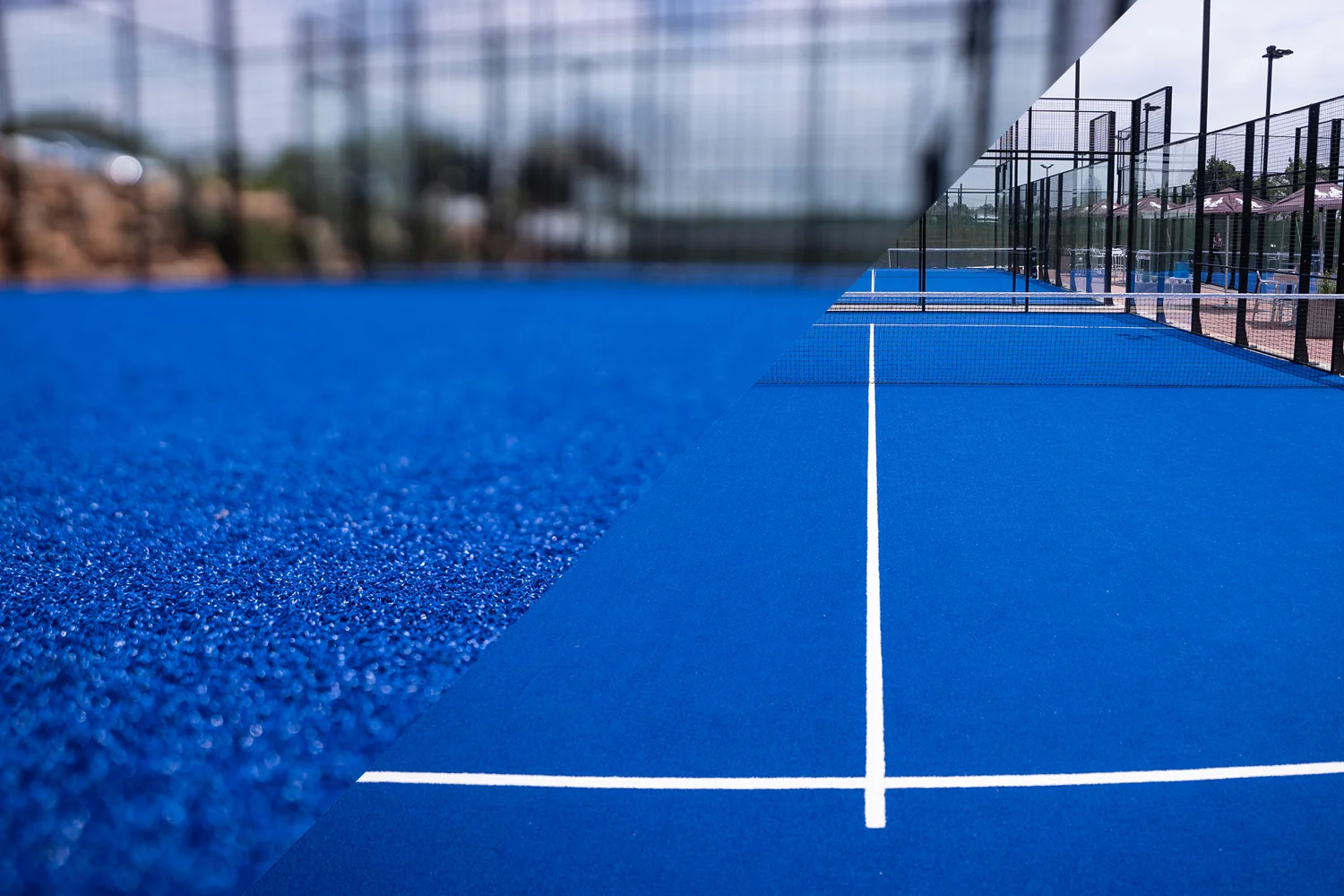
Artificial turf has become the preferred surface for most padel installations worldwide, offering excellent play characteristics, durability, and relatively straightforward maintenance. Modern padel-specific turf systems represent significant advancement over early generations, incorporating specialized fiber designs, infill materials, and backing systems optimized for the sport's unique demands.
Fiber technology has evolved to provide optimal ball roll and player footwork characteristics. Polyethylene monofilament fibers offer durability and resilience while maintaining a natural grass-like appearance and feel. Fiber height, density, and texturization are calibrated specifically for padel, typically ranging from 10-15mm for optimal performance. These specifications differ from landscaping turf or other sports applications, requiring specialized products from experienced manufacturers.
Infill materials significantly affect play characteristics and surface longevity. Sand infill provides weight stabilization and contributes to ball bounce consistency. The type, gradation, and application rate of infill materials require precise control during installation. Some advanced systems incorporate specialized infill materials that reduce surface temperatures—a significant consideration in Houston's climate—or provide additional cushioning properties.
Backing systems provide dimensional stability and drainage capacity. Perforated polyurethane or latex backings allow water passage while maintaining structural integrity. In Houston's heavy rainfall environment, drainage performance prevents water accumulation that could affect play or accelerate material degradation. Quality backing systems also resist UV damage and dimensional changes from temperature fluctuations.
ACRYLIC AND HARD COURT SURFACES
While less common than turf for padel, acrylic hard court surfaces offer distinct advantages for certain applications. These surfaces provide consistent, predictable ball bounce and can be customized for different play speeds through surface texture and coating selection. Indoor facilities or climate-controlled environments often favor hard court surfaces.
Acrylic surface systems typically consist of multiple layers: a cushion coat providing shock absorption, color coats establishing the playing surface, and finish coats creating texture and protection. Each layer requires proper curing times and environmental conditions during application. Houston's humidity affects curing times and may require adjusted application schedules.
Surface texture influences both ball behavior and player safety. Smoother surfaces produce faster play with lower, skidding bounces while textured surfaces slow play and create higher bounces. Texture also affects slip resistance, requiring careful balance between play speed and injury prevention. Professional application ensures consistent texture across the entire court surface.
Color selection extends beyond aesthetics, affecting surface temperature and glare. Lighter colors reflect more solar radiation, reducing surface temperatures during Houston's intense summers. However, excessive brightness creates glare that affects visibility. Mid-tone colors often provide the best balance, with specialized pigments available that minimize heat absorption without creating excessive brightness.
THE PROFESSIONAL INSTALLATION PROCESS
Surface installation demands precise preparation and application techniques to achieve optimal results. The process begins with thorough base preparation—any imperfections, moisture issues, or contamination in the underlying structure will telegraph through to the finished surface, creating performance or durability problems.
For turf installations, base preparation includes ensuring proper drainage slope, compacting to specified densities, and verifying levelness tolerances. Even minor base imperfections become visible in the finished surface, creating aesthetic issues and potential trip hazards. Professional installers use specialized equipment to achieve the precision required for quality results.
Turf installation proceeds in sections, with careful attention to seam placement and orientation. Seams must be virtually invisible and structurally sound, positioned to minimize visibility and wear patterns. Adhesive selection and application techniques ensure permanent bonding without visible seams or edge curling. Infill application follows precise rates, typically requiring multiple passes with specialized equipment for even distribution.
Acrylic surface installation requires favorable weather conditions—typically temperatures between 50-90°F with low humidity and no precipitation forecast for 24-48 hours. Houston's climate creates narrow installation windows during certain seasons. Experienced contractors monitor conditions carefully and adjust schedules to ensure proper curing and adhesion.
Quality control during installation includes ongoing levelness checks, seam integrity verification, and surface characteristic testing. Post-installation procedures allow proper curing before court use, protecting the investment and ensuring warranty coverage remains valid.
CLIMATE-SPECIFIC CONSIDERATIONS FOR HOUSTON
Houston's subtropical climate presents unique challenges for padel court surfaces. Extreme heat, intense UV radiation, high humidity, and heavy rainfall all affect surface performance and longevity. Material selection and installation techniques must account for these environmental factors.
UV degradation represents a primary concern for surface materials. Constant exposure to intense Texas sunlight accelerates fading, fiber breakdown in turf systems, and coating deterioration on hard courts. UV-stabilized materials, protective coatings, and color selections that minimize heat absorption help extend surface life in these conditions.
Heat management affects both player comfort and surface durability. Artificial turf surfaces can reach temperatures exceeding 150°F during Houston summers—too hot for comfortable play and potentially damaging to surface materials. Specialized infill materials that reduce surface temperature, lighter color selections, and proper base construction that allows some cooling airflow help manage this challenge.
Rainfall and humidity create moisture management concerns. Houston receives over 50 inches of annual rainfall, much of it in intense storm events. Surface and base systems must drain efficiently to prevent water accumulation that could affect play or accelerate material degradation. Houston's high humidity also affects curing times for acrylic surfaces and may contribute to mold or algae growth on inadequately draining turf systems.
Seasonal temperature variations, while less extreme than northern climates, still affect surface expansion and contraction. Installation techniques must accommodate these movements without creating wrinkles, seam failures, or coating cracks. Proper material selection and professional installation ensure surfaces remain stable throughout Houston's seasonal cycles.
FREQUENTLY ASKED QUESTIONS
What type of surface is best for padel courts?
We use premium artificial turf specifically designed for padel courts. The turf has optimal pile height and infill distribution to provide consistent ball bounce, excellent traction, and player comfort.
How long does padel court surfacing last?
With proper maintenance, our premium padel court surfacing lasts 8-12 years. We use UV-resistant materials designed to withstand Houston's intense heat and sun exposure.
GET YOUR FREE QUOTE TODAY
Serving Houston and surrounding areas with professional Padel Court Surfacing services. Contact us now for a free consultation.